
Monday, April 20, we will meet in person.
Go to calendar for our schedule
Address for OHMC meditation space:
3812 Northampton St. NW, Washington DC 20015
Please arrive a few minutes early so we can invite the bell on time. You may also arrive 15 minutes early to practice working meditation by helping us set up cushions.
Dear friends,
This week, we will meet Monday evening, April 20, from 7-8:30PM ET in person at our meditation space (3812 Northampton Street NW); Wednesday morning, April 22, from 7-8AM ET online; and Friday, April 24, 12-1PM ET online/in person (Hybrid).
On Monday, our evening meditation will be facilitated by Annie. Annie shares:
I am so grateful for the Dharma and the ways that Thich Nhat Hanh (Thay) has offered it to us. During these days of the many crises facing our country and the world (often referred to as the polycrisis), I need the support of the Dharma to help me stay grounded and make sense of it.
Thich Nhat Hanh (Thay) spoke often of the insight of interbeing. He often used the metaphor of a flower to describe it:
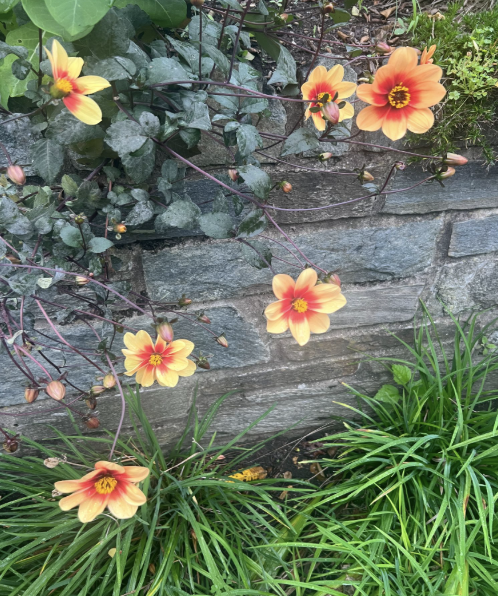
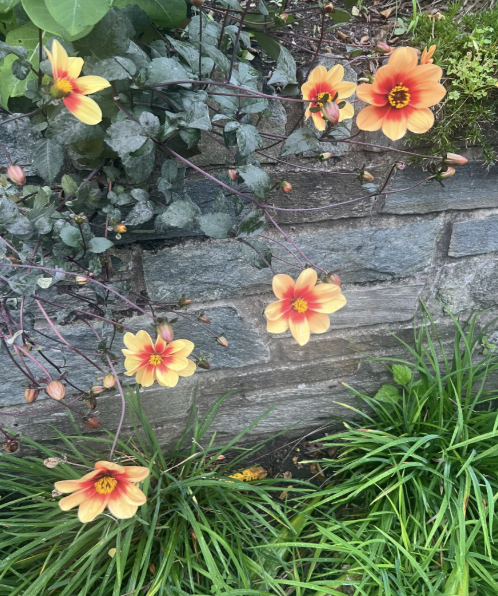
“When we contemplate a flower like this, we see the flower is full of everything: the cloud, the sunshine, the Earth, time, space, the gardener—everything has come together to help the flower to manifest. Why do we say it is empty? It is empty of only one thing: a separate existence.
A flower cannot be by herself alone. A flower is full of non-flower elements. It is clear that the flower has to be interbe with everything in the cosmos. She cannot be by herself alone. To be by oneself alone is impossible. So we begin to see the interdependence of everything.”
For someone in touch with this insight of interbeing, the news and recent social media posts of the President land differently. As a practitioner, we know that anything we do to someone else, we also do to ourselves. So, when the President posts about ending a civilization, we know that these so-called solutions create more suffering, not less. We know that the bombing of human beings and nature can only bring more suffering for all of us.
We also see that we inter-are with the human beings detained or killed by ICE, deported, and separated from loved ones. And we inter-are with the ones causing the harm as well as those receiving the harm.
Aware of our interbeing with everything in our cosmos, we also recognize that the Earth is the main source of wellbeing and nourishment for all of us. So, we grieve and resolve to do what we can about the harm being done to the Earth from so much of our modern life, including the massive fallout from missiles as well as the destruction caused by the pressure to consume more and more.
Thay writes in Love Letters to the Earth:
“Dear Mother, wherever there is soil, water, rock or air, you are there, nourishing me and giving me life. You are present in every cell of my body. My physical body is your physical body, and just as the sun and stars are present in you, they are also present in me. You are not outside of me and I am not outside of you. You are more than just my environment. You are nothing less than myself.”

How does interbeing help us respond to this polycrisis? Thay wrote, “Man is not our enemy. Our enemy is hatred, anger, ignorance, and fear.” Other humans, no matter how disturbed, cannot be our enemy. Because, like us, they grew up with conditions that led them to find unique–and sometimes extremely harmful-ways to get their needs met. If we demonize them, we demonize ourselves.
So, with our mind settled in the present moment and aware of the interbeing nature of everything, we can try to find ways to respond that hold everyone as equal participants. Interbeing inoculates us from falling into partisan violence, but interbeing doesn’t stop us from actively doing what we can to reduce harm and transform unwholesome ways of thinking and acting. Both the Buddha and Thay were active in the political life of their times, helping governments be more inclusive and compassionate. They both took positions on the functioning of their communities and societies, and they worked to help bring about more peace. This is something we can also do.
The culture in the U.S. is pushing us further away from the insights of the Buddha and what we know in our hearts to be true. It’s like a stream that is taking us further and further from the shore of wellbeing. The Buddha wrote that our intentions are like a band of strong men who are dragging us into a pit of fire. If our intentions and volition are aligned with the harmful elements of our culture, we will be dragged into deeper and deeper suffering. But if we remain in a healthy community and together continue to hold our volition and intention toward compassion and compassionate action based on interdependence, relational action, recognition of what we already have here and now, then we can be part of the movement toward wellbeing for everyone. Because of interbeing, we all awaken together.
Although the wind
blows terribly here,
the moonlight also leaks
between the roof planks
of this ruined house.
– (Izumi Shikibu, trans. Jane Hirshfield)
The insight of impermanence can also give us some immediate relief. We know that however hard things are right now, they will change. Impermanence also brings us gratitude for the beautiful and joyful things that we have in front of us in this moment. It could be the changing face of the Earth from season to season, a hug from our dharma sibling, unexpected spring flowers, hot humid summers, cool night breezes, wildlife–all of it can be a source of healing.
On Monday, we can reflect on the insight of impermanence and how it supports our day-to-day life. How do you work with suffering using the insight of interbeing?
with love,
annie