Monday, March 23, we will meet in person.
Go to calendar for our schedule
Address for OHMC meditation space:
3812 Northampton St. NW, Washington DC 20015
Please arrive a few minutes early so we can invite the bell on time. You may also arrive 15 minutes early to practice working meditation by helping us set up cushions.
Dear friends,
This week, we will meet Monday evening, March 23, from 7-8:30PM ET in person at our meditation space (3812 Northampton Street NW); Wednesday morning, March 25, from 7-8AM ET online; and Friday, March 27, 12-1PM ET online/in person (Hybrid).
Annie will facilitate on Monday evening. Annie shares:
This past weekend, I noticed I was behaving in a way that caused me to wonder if I might have some suppressed anger. I was surprised to hear myself telling a humorous story that showed some of the people in a quite unfavorable light. This is an old habit, one I thought I had transformed.
As soon as I sat with my feelings (after apologizing to the folks I was speaking to), I realized that the amount of terror, war, unfairness, and violence I have been taking in every day on the news had led to a buildup of anger and fear inside of me. I’ve been reaching for the news as a way to feel some sort of control over an uncontrollable world. And while we have never had control over the world, right now feels like a particularly worrisome moment for so many beings throughout the cosmos.
I know that Thay often spoke about protecting our senses–what we see, hear, taste, smell, touch, and think about. I know that some people have decided to stop watching the news, and that may be the best choice for them. I also believe, and Thay’s teachings also reflect this, that I need to continue to face the truth of suffering if I want to be someone who can contribute to healing.
Meditation means to be aware of what is happening in the present moment—to your body, to your feelings, to your environment. But if you see and if you don’t do anything, where is your awareness? Then where would your enlightenment be? Your compassion? In order not to get lost, you have to be able to continue the practice there, in the midst of all that. But no one can be completely there twenty-four hours a day.
I find that after having talked to two or three people who have deep suffering, I, myself feel the need to withdraw in order to recuperate (Thich Nhat Hanh, Tricycle Magazine, 1995).
So how can we remain aware of the immense suffering without closing our hearts or becoming angry or violent ourselves? Here are a few ways that I chose to work with this:
Take care of anger and fear
To start with, I needed to remember to take care of my own anger and fear. I needed to listen to what was happening inside of me while trusting that my feelings had noble intentions, even if they caused me to do ignoble things. As Thay says in the passage above, even he needs to withdraw in order to recuperate after witnessing suffering.
Anger often arises when I feel I need to protect those who have less ability to protect themselves. Fear arises when I worry about people facing violence or separation. These are valid responses. Recognizing and acknowledging the roots of our anger and fear can be the first step in transformation.
On Monday, we will begin with a guided meditation to practice taking care of our anger and our fear. This practice can soften and clear our minds enough to know what the next right step for us might be.
Pause before reading the news
I also realized that I consume the news all day, sometimes without thinking. I open my phone and go right to the news. If I start by centering myself before opening the news, I am in a much better position to manage the upsetting photos or stories of suffering. To look at the suffering in the world without turning away is an act of love. And love requires stability as well as compassion.
As mindfulness practitioners, we always start with pausing, breathing, and calming our bodies. Once I am calm, I know if this is even the right time to be checking the news. It might be a time to do something to nourish joy instead. When I do read the news from a calm state, I can go slow in order to titrate the pain and suffering I let in. That way, I don’t become overwhelmed or create (suppressed) anger and I can let the world’s pain genuinely touch me.
Feel grief with support
Often living right under my anger and fear is a well of grief. Why is the world this way? Why do some people have to suffer so much? This grief is a reflection of our innate kindness, love, humanity, and interbeing. We can practice allowing and holding grief with tenderness.
The Bodhisattva Avaloketeshvara embodies the kind of compassion that can hear all the cries of the world and hold them all without being destroyed by them. We probably can’t do that yet ourselves, so we can lean on this compassionate energy to help us. I learned a practice of chanting Namo ‘Valo while touching the suffering in myself, my community, and the world. When I practice this, which I try to do daily, I feel less of the need to try to control the world and more supported by the cosmos.
I also find support through spending time and sharing my heart in community with people who also want to embody love and compassion. Sangha is a great place to find this kind of honest support, but it’s not the only place. When I spend too much time with people or websites who water my anger or deny suffering, I can’t maintain my equanimity.
Find ways to act
I always feel better when I take action, however small. Whether it’s signing a petition, going to a rally, writing a letter to someone in power, or providing material support to those who need it, taking wise action can help lift some of the despair that grows during difficult times when we don’t have the power to change the situation. Small actions can sometimes have big effects.
In 2025, I wrote a blog about finding your “zone of action” that you can read here if you’d like more support on identifying what wise action might look like for you right now.
Take time for joy
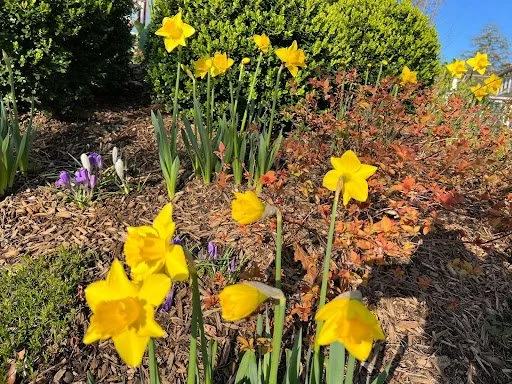
We already know how important joy and lightness is for our bodies and minds. When the going gets tough, we often shy away from taking time for joy. But it is most important when we feel overwhelmed. For me, joy might be simply noticing that in this moment I have enough food to eat, that my loved ones are healthy, that the flowers have started blooming (as they have here in DC!), or it might be a walk outside or a phone call with a sister or friend.
Thich Nhat Hanh wrote about how to hold suffering in Buddha Mind, Buddha Body:
How can we help our hearts to grow every day, to be able to embrace everything? The Buddha gave a very beautiful example. Suppose you have a bowl of water and someone put a handful of salt in the bowl of water; it would be too salty for you to drink. But suppose someone threw a handful of salt into a clean mountain river. The river is deep and wide enough that you can still drink the water without tasting the salt.
When your heart is small, you suffer a lot. But when your heart becomes bigger, very big, then the same thing does not make you suffer anymore. So the secret is how to help your heart to grow… We suffer because our heart is small… The moment when we have a lot of compassion, there is no suffering anymore. We encounter the same types of people, we encounter the same situations, but we don't suffer anymore because our love is so large.
Some reflections we might consider together:
Have you noticed any suppressed or unexpected emotions arising in yourself lately? How did you recognize them?
How do you currently relate to the news—do you consume it mindfully, compulsively, or have you stepped back?
What helps you stay open to the world's suffering without closing your heart or becoming overwhelmed?
What does your heart need most right now—more stillness, more action, more community, more joy?
I look forward to practicing and sharing with you on Monday.
with love,
annie